
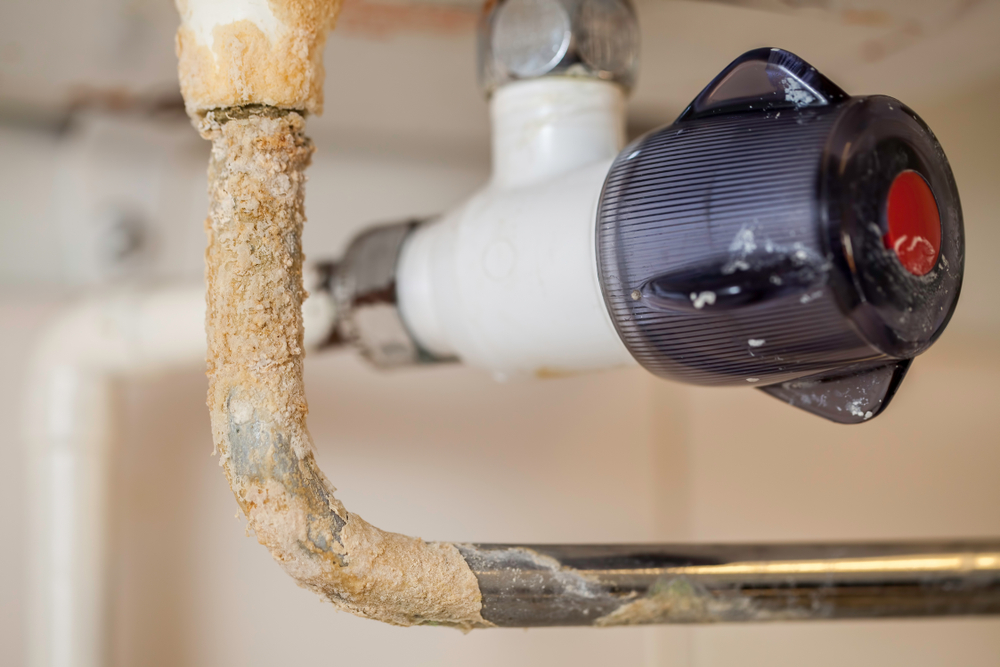
If you live in London or the South East, there’s a good chance limescale is building up inside your boiler right now. You can’t see it. You probably can’t hear it yet. But every time your boiler heats water, a thin layer of chalky scale settles on its most important parts.
Left alone, that scale pushes up your gas bills, makes your boiler noisy, and can end in a breakdown on the coldest night of the year.
The good news? Limescale damage is slow, predictable and largely preventable. This guide explains why the water here is so hard, what it does to your boiler, the warning signs to look for, and the simple steps that keep your heating running.
In this guide:
- Why London and the South East have such hard water
- How limescale damages a boiler
- 7 warning signs your boiler is scaling up
- What limescale really costs you
- How to protect your boiler from hard water
- When to call a professional
Why London and the South East Have Such Hard Water
It comes down to geology. Much of the region sits on chalk and limestone. As rain soaks through that rock, it picks up dissolved calcium and magnesium. That mineral-rich water is what we call “hard”.
Thames Water, which supplies most of London, sources around 65% of its water from rivers and 35% from underground aquifers. Because that water passes through chalk again and again, the company states plainly that all the water in its region is hard.
Water hardness is measured in milligrams of calcium carbonate per litre (mg/l). Here’s how Thames Water grades it:
| Hardness | mg/l calcium carbonate |
|---|---|
| Soft | Up to 100 |
| Slightly hard | 100–150 |
| Moderately hard | 150–200 |
| Hard | 200–300 |
| Very hard | More than 300 |
Most London postcodes fall in the hard or very hard bands. Many towns across Kent, Surrey, Berkshire, Hertfordshire and Essex are similar, whichever water company supplies them.
Want your exact figure? Enter your postcode into your water supplier’s online checker. Thames Water customers can use the Thames Water water quality checker. Anything over 200 mg/l means your boiler needs protecting.
We see the effects every week, from boiler repairs in London to call-outs for boiler services in Kent, Reading and Guildford.
How Limescale Damages Your Boiler
When hard water is heated, the dissolved minerals come out of solution and stick to hot metal surfaces as limescale. The hotter the water, the faster it forms.
Inside a boiler, the worst-hit part is the heat exchanger. This is where the flame’s heat passes into your water. Scale on its surface acts like a layer of insulation, so the boiler has to burn more gas to deliver the same heat.
Industry research backs this up. A study by the US engineering body ASHRAE found that a 1.5mm coating of limescale can cut boiler efficiency by around 11%, with losses rising as the scale thickens.
Combi boilers are most at risk
A combi boiler heats fresh mains water on demand, every time you run a tap or shower. That means a constant flow of new, mineral-rich water through its hot water heat exchanger. In a hard water area, that’s a recipe for rapid scaling.
System and regular boilers are a little more protected, because their heating circuit is sealed and recirculates the same water. But their hot water cylinders, immersion heaters and coils still scale up.
What happens as scale builds
- Narrower waterways. Scale restricts flow through the heat exchanger.
- Hot spots. Trapped water overheats and flashes into steam. This causes the rumbling noise engineers call “kettling”.
- Stressed components. Overheating strains the heat exchanger, pump, sensors and diverter valve.
- Lockouts and breakdowns. The boiler’s safety systems shut it down, or a part fails outright.
A heat exchanger replacement is one of the most expensive boiler repairs. On an older boiler, it can tip the balance towards a full replacement.
7 Warning Signs Your Boiler Is Scaling Up
Limescale rarely causes a sudden failure without warning. Look out for these signs:
- Kettling noises. Rumbling, banging or a sound like a boiling kettle when the boiler fires up.
- Hot water that runs hot, then cold. Temperature swings at the tap or shower, especially on a combi.
- Slow-to-heat water. You’re waiting longer for hot water than you used to.
- Weaker hot water flow. Cold taps run fine, but the hot tap is noticeably slower.
- Rising gas bills. Your usage creeps up even though your habits haven’t changed.
- Frequent lockouts or fault codes. Overheat or flow-related error codes that keep coming back.
- Visible scale elsewhere. If your kettle, taps and showerheads crust up quickly, your boiler is seeing the same water.
Spotted two or more? Don’t wait for a breakdown. Book a boiler service and ask the engineer to check for scale.
Safety first: If you smell gas, see black sooty marks on your boiler, or your carbon monoxide alarm sounds, stop using the boiler. Call the National Gas Emergency Service on 0800 111 999 straight away.
What Limescale Really Costs You
Limescale hits your wallet in three ways.
1. Higher energy bills. According to figures from the trade body British Water, just 1.6mm of scale can cause a 12% loss in heating efficiency. In plain terms, roughly one pound in every eight you spend on gas could be wasted heating up limescale instead of your home.
2. More repairs. Scale is behind many of the faults we fix in hard water areas: failed heat exchangers, seized diverter valves, blocked sensors and overheating pumps. Each one is a call-out, a part and a cold house while you wait.
3. A shorter boiler life. A well-maintained boiler can last 10 to 15 years. A heavily scaled one can fail years earlier, forcing a replacement you weren’t budgeting for.
| Problem | Cause | Typical impact |
|---|---|---|
| Wasted gas | Scale insulates the heat exchanger | Up to 12% efficiency loss at 1.6mm |
| Kettling and noise | Overheating in narrowed waterways | Strain on parts, early warning of failure |
| Component failure | Scale blocks valves, sensors and pumps | Repair call-out and parts |
| Heat exchanger failure | Long-term overheating and corrosion | Costly repair or full boiler replacement |
For a clear idea of call-out and labour costs, see our rate guide.
How to Protect Your Boiler from Hard Water
You can’t change the water coming out of the mains. But you can stop it wrecking your boiler. Here are the six steps that make the biggest difference.
1. Fit a scale reducer
A scale reducer is a small device fitted on the cold water pipe feeding your boiler. Magnetic and electrolytic types change how minerals behave, so less scale sticks to hot surfaces.
In England, Building Regulations guidance says that where mains water hardness exceeds 200 ppm (200 mg/l), the feed to combi boilers and water heaters should be treated to reduce limescale. Many boiler manufacturers also expect one to be fitted in hard water areas to keep the warranty valid. In most of London, that means a new boiler should come with one.
Not sure if you have one? Look for a cylindrical unit on the pipework just below your boiler. If there’s nothing there, ask your engineer at your next service.
2. Get an annual boiler service
A yearly service is the single best way to catch scale before it causes a breakdown. A Gas Safe registered engineer will check combustion, flow rates and pressures, and look for signs of kettling or restricted flow.
Book yours before winter hits. Our gas engineers in London and across the South East, including Maidstone, Slough and Dartford, can fit you in.
3. Consider a water softener
A whole-house water softener removes hardness minerals before water reaches your boiler, taps and appliances. It’s the most complete fix for very hard water.
Two things to know. Thames Water advises keeping a separate unsoftened tap for drinking and cooking. And your engineer should confirm whether softened water is suitable for your heating system, as some manufacturers have specific rules. A qualified plumber in London can advise and install.
4. Don’t run hot water hotter than you need
Scale forms faster at higher temperatures. Thames Water recommends keeping hot water at 60°C or lower to reduce build-up. On a combi, there’s rarely a need to go higher. If you have a hot water cylinder, keep stored water at 60°C to control Legionella bacteria. Don’t go below that.
5. Protect the heating circuit with inhibitor
Your radiators and pipework need protecting too. A chemical inhibitor in the central heating water helps prevent scale, sludge and corrosion. Your engineer should check inhibitor levels at each service and top up when needed.
6. Descale or flush when needed
If scale has already built up, an engineer can chemically descale the heat exchanger or flush the system. This often restores lost efficiency and quietens a kettling boiler. It’s far cheaper than a new heat exchanger.
What You Can Do Yourself vs When to Call an Engineer
Some limescale jobs are safe and simple. Anything inside the boiler casing is not. By law, only a Gas Safe registered engineer can work on gas appliances.
| Safe to do yourself | Call a Gas Safe engineer |
|---|---|
| Check your water hardness by postcode | Kettling, banging or rumbling noises |
| Descale showerheads, taps and kettles | Repeated fault codes or lockouts |
| Check boiler pressure (usually 1–1.5 bar when cold) | Hot water that keeps going hot and cold |
| Look for a scale reducer under the boiler | Fitting a scale reducer or water softener |
| Bleed radiators with cold spots at the top | Descaling or flushing the boiler or system |
| Note any error codes to tell your engineer | Any smell of gas or signs of carbon monoxide |
A kettling boiler can tip into a full breakdown without much notice, often during a cold snap when demand is highest. Our Storm Austen heating help guide covers what to do if your heating fails in bad weather.
Frequently Asked Questions
Is London water hard?
Yes. Thames Water, which supplies most of London, says all the water in its region is hard. Most London postcodes sit in the hard (200–300 mg/l) or very hard (300+ mg/l) range.
How do I know if my boiler has limescale?
The classic sign is kettling: a rumbling or boiling-kettle noise when the boiler fires. Other clues are fluctuating hot water temperatures, weaker hot water flow, recurring fault codes and rising gas bills.
Can limescale break a boiler?
Yes. Scale causes overheating in the heat exchanger, which can lead to lockouts, failed components and, eventually, a cracked or failed heat exchanger. On older boilers, that repair may not be worth doing.
Do I need a scale reducer in London?
If your mains water is over 200 mg/l, which covers most of London, Building Regulations guidance in England says the feed to a combi boiler should be treated to reduce limescale. Many manufacturers also expect a scale reducer for warranty purposes.
Is hard water bad for combi boilers?
Combi boilers are the most exposed because they heat fresh mains water every time you use hot water. That constant supply of minerals means scale builds faster than in system or regular boilers.
How often should a boiler be serviced in a hard water area?
At least once a year. Annual servicing lets an engineer spot early signs of scale, check inhibitor levels and keep your manufacturer’s warranty valid.
Can I descale my boiler myself?
No. Descaling a boiler means working on a gas appliance, which by law requires a Gas Safe registered engineer. You can safely descale taps, showerheads and kettles yourself.
Stop Limescale Before It Stops Your Boiler
Hard water is a fact of life in London and the South East. A failed boiler doesn’t have to be.
A yearly service, a properly fitted scale reducer and quick action on warning signs will keep your boiler efficient, quiet and reliable for years longer.
Whether your boiler is kettling, losing hot water or you just want it checked before winter, 24/7 Best Emergency Services is here to help. Our Gas Safe registered engineers cover London, Kent, Surrey, Berkshire and Buckinghamshire, day and night.
Call us now on 020 3318 8667 or book a boiler engineer online.
Explore all our heating, plumbing and electrical services.