
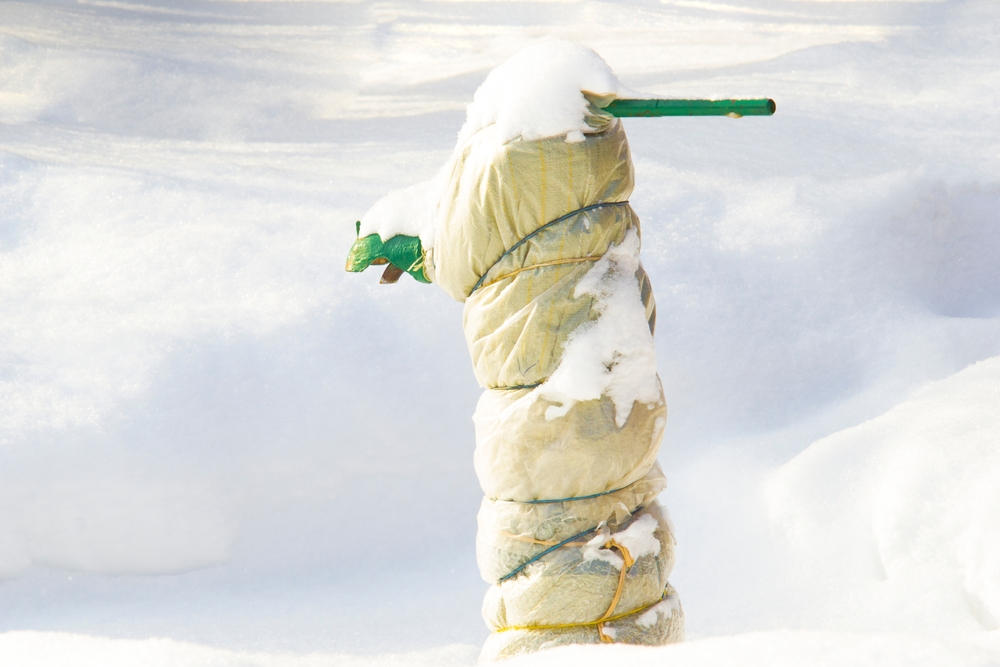
Why outside taps freeze and burst
Your outside tap sits on the coldest side of your home, fed by a short length of pipe that runs straight through the external wall. Unlike pipework indoors, it gets no warmth from your heating.
When the temperature drops below zero, the water left inside the tap and pipe starts to freeze. Water expands by roughly 9% as it turns to ice, and that pressure has nowhere to go. The result is a split pipe, a cracked tap body or a joint pushed apart.
Here’s the catch: you often won’t know anything is wrong until the thaw. Once the ice melts, water escapes through the split at full mains pressure – and if the damaged section is on the inside of the wall, it can flood your home before you notice.
It’s more common than you’d think. Research from WaterSafe, the national register of approved plumbers, found that 15% of UK residents have had a burst pipe in winter.
The real cost: £5 vs £500+
The headline isn’t an exaggeration. Compare what prevention costs with what a frozen outside tap can leave you paying.
| Cost item | Typical UK price |
|---|---|
| Insulated outside tap cover | £4.50 – £7 |
| Foam pipe lagging (per metre) | Under £2 |
| Total prevention cost | About £5 – £10 |
| Emergency plumber call-out | £80 – £200 |
| Burst pipe repair | £150 – £350 |
| Making good (plaster, flooring, decorating) | £150 – £600 |
| Total cost of a burst | £380 – £1,150+ |
Prices are indicative ranges from UK retailers and 2026 cost guides including Checkatrade. Your quote will vary with access, location and time of day.
And that’s before any insurance excess, damaged belongings or the hassle of drying out a room. Across the UK, insurers pay out around £1.8 million every day on escape of water claims, according to the Association of British Insurers. A £5 cover is very cheap insurance by comparison.
For a clear idea of our own pricing, see our rate guide.
How to insulate an outside tap: 10-minute guide
You don’t need any plumbing skills for this. Set aside ten minutes on a dry day, ideally in October or early November before the first hard frost.
What you’ll need
- An insulated outside tap cover (sold at most DIY stores and online)
- Foam pipe lagging for any exposed pipe (15mm is standard for most homes)
- Waterproof tape or cable ties
- A bucket and an old towel
Step 1: Disconnect the hose
Unscrew your garden hose and any connectors. A hose left attached traps water in the tap, which makes freezing far more likely. Drain the hose and store it in a shed or garage.
Step 2: Find the isolation valve
Most outside taps have an isolation valve on the pipe inside the house – usually under the kitchen sink, in a utility room or in the garage. It’s often a small valve with a slot you turn with a flat-head screwdriver, or a little lever.
Step 3: Turn the water off and drain the tap
Turn the isolation valve a quarter turn so the slot or lever sits across the pipe. Then go outside and open the tap fully to let the remaining water run out. Leave it open for a minute or so until it stops dripping.
This is the single most effective step. A tap with no water in it can’t freeze and burst. Water safety bodies such as the Consumer Council for Water recommend either insulating outside taps or turning them off and draining them – doing both gives you the best protection.
Step 4: Lag any exposed pipe
If you can see pipework on the outside wall, wrap it in foam lagging. Cut it to length, slip it over the pipe and seal the joins with waterproof tape. Make sure there are no gaps, especially at bends and where the pipe enters the wall.
Step 5: Fit the tap cover
Slip the insulated cover over the tap and secure it with its strap, clips or hook-and-loop fastening. It should sit snugly against the wall with no gaps for cold air to get in. Yorkshire Water has a handy short video on fitting a tap guard if you’d like to see it done.
Step 6: Check it after storms
Wind and rain can loosen covers over the winter. Give yours a quick look after any spell of rough weather – our Storm Austen guide covers other checks worth doing at the same time.
No isolation valve? Read this
Many older homes have outside taps with no separate isolation valve. In that case:
- Still fit the cover and lag the pipe – this alone gives good protection in most UK winters.
- Avoid using the tap during freezing spells.
- Consider having a plumber fit an isolation valve. It’s a quick, low-cost job that lets you shut off and drain the tap every winter.
While a plumber is there, ask them to check that your tap has a double check valve. Under the Water Supply (Water Fittings) Regulations, outside taps need backflow protection to stop dirty water being drawn back into your drinking supply. Many older taps don’t have one.
Our plumbing services cover isolation valve fitting, outside tap replacement and winter checks.
Signs your outside tap has already frozen
Watch out for these warning signs during a cold snap:
- No water, or only a trickle, when you open the tap
- Frost or ice visible on the tap or the pipe leading to it
- A bulge or hairline crack in the pipe or tap body
- Damp patches on the inside wall behind the tap
- A hissing sound or a drop in water pressure elsewhere in the house
What to do if your outside tap freezes
Act calmly and quickly. Following WaterSafe’s winter advice:
- Turn off the water at the isolation valve, or at your main stop tap if there isn’t one.
- Leave the outside tap open so water can escape as it thaws.
- Thaw it gently with a hot water bottle or a towel soaked in warm water, starting at the tap end and working back towards the wall.
- Never use a naked flame or blowtorch – it’s a fire risk and can damage the pipe.
- Check for leaks as the water comes back. Look at the pipe outside and the wall inside.
If you find a split or leak, keep the water off and call a plumber. Even a small crack will get worse under mains pressure.
Do you know where your main stop tap is? If not, find it today. It’s usually under the kitchen sink, but can be in a downstairs toilet, under the stairs or in the garage. In a burst, every minute it takes to turn the water off means more damage.
More ways to protect your home this winter
Your outside tap is just one weak spot. While you’re winter-proofing, it’s worth ticking off these too:
- Lag pipes in the loft, garage and other unheated spaces. These freeze for the same reasons outside taps do.
- Fix dripping taps and overflows. A small trickle can freeze and block a pipe.
- Keep the heating on low if you’re away. WaterSafe advises keeping your home at no lower than 14°C overnight and when you’re out.
- Protect your boiler’s condensate pipe. If this plastic pipe freezes, your boiler will shut down. Our boiler engineers can reroute or insulate it.
- Keep an eye on the forecast. The Met Office issues cold weather warnings in advance, giving you time to prepare.
Frequently asked questions
Do outside tap covers really work?
Yes. An insulated cover slows heat loss from the tap and protects it from wind chill and frost. On its own, it works well in typical UK winters. For the best protection during long, hard freezes, combine it with turning off and draining the tap.
How much does an outside tap cover cost?
Most cost between £4.50 and £7 from DIY stores such as B&Q and Screwfix. Basic polystyrene versions can be even cheaper.
When should I insulate my outside tap?
Ideally by late October or early November, before the first frost. If you’ve missed that window, do it as soon as you can – a cold snap can arrive with very little notice.
Should I leave my outside tap dripping in winter?
No. Unlike some advice for very cold climates abroad, leaving an outside tap dripping in the UK can cause ice to build up and block the pipe. Turning it off and draining it is the safer option.
Is a burst outside tap pipe covered by home insurance?
Many buildings policies cover escape of water, but excesses for this type of claim are often higher than standard. Some insurers may also question claims where basic precautions weren’t taken. Check your policy wording, and speak to your insurer if you’re unsure.
Can I replace a frost-damaged outside tap myself?
If you’re confident with basic plumbing, it’s possible. However, the new tap must meet water regulations, including backflow protection. If the damage is inside the wall or you’re not sure, it’s best to call a qualified plumber.
Have a different question? Visit our plumbing FAQs.
Burst pipe? We’re here 24/7
If the cold has already caught you out, don’t wait for the damage to spread. Turn off your water and call our emergency team on 020 3318 8667.
Our certified plumbers are available day and night across England, including:
- Plumbers in London
- Plumbers in Birmingham
- Plumbers in Manchester
- Plumbers in Leeds
- Plumbers in Bristol
Prefer to book a winter check in advance? Contact us and we’ll get your outside taps, pipes and boiler ready for whatever winter brings.
Five minutes and a fiver today could save you hundreds tomorrow.