
It is 5pm on a Monday in late October. You walk through the front door, flick the hall switch, and nothing happens. The kitchen lights flicker. The garden is pitch black.
That moment is closer than you think. The clocks go back at 2am on Sunday 25 October 2026, and overnight your evenings lose an hour of daylight. Your lights, heaters and sockets go from occasional use to working hard every single evening.
Any electrical fault you have been ignoring since spring is about to become a problem you cannot ignore. The good news? Most of them are easy to spot now, while it is still light enough to see what you are doing.
This guide shows you which electrical faults to fix before the dark nights, a quick checklist you can do this weekend, and the warning signs that mean you need an electrician straight away.
Quick answer: Before the clocks go back, test every light and switch, check outdoor and security lights, look for scorch marks or warm sockets, and press the test button on your RCD. Book a qualified electrician for anything that flickers, buzzes, trips or smells of burning.
Why the dark nights put extra strain on your electrics
When the clocks change, the UK switches from British Summer Time back to Greenwich Mean Time. Royal Museums Greenwich explains that this happens on the last Sunday of October every year. Sunset in much of England drops to around 4:45pm almost overnight.
That sudden shift changes how your home uses power:
- Lights stay on for hours longer. A loose connection that barely warmed up in summer now runs every evening.
- Heating comes on at the same time. Electric heaters, storage heaters and boilers add load to circuits that have been resting since March.
- Everything happens at once. Cooking, washing, heating and lighting all peak between 5pm and 9pm.
- Outdoor kit faces wet weather. Garden lights, security lights and doorbells sit in rain and frost for months.
In short, small faults get stressed at exactly the time you need your electrics most. That is why autumn is such a busy time for emergency electrical callouts.
7 common electrical faults to fix before the clocks go back
These are the faults our electricians see most once the evenings draw in. Each one is cheaper and safer to fix in October than in the middle of a cold December night.
1. Flickering or dimming lights
One flickering bulb is usually just a loose or failing bulb. Lights that flicker across a whole room, or dim when the kettle goes on, point to a loose connection or an overloaded circuit. Loose connections create heat, and heat is how electrical fires start.
2. Lights or sockets that have stopped working
A dead socket or light fitting you have been “meaning to sort” all summer will matter once you rely on it every evening. It can mean a failed fitting, a tripped circuit or a broken connection hidden behind the wall.
3. A consumer unit that keeps tripping
If your fuse box trips when several appliances run together, the circuit may be overloaded or one appliance may be faulty. If it trips during wet weather, read our guide on why your RCD keeps tripping every time it rains.
4. Warm, buzzing or scorched sockets and switches
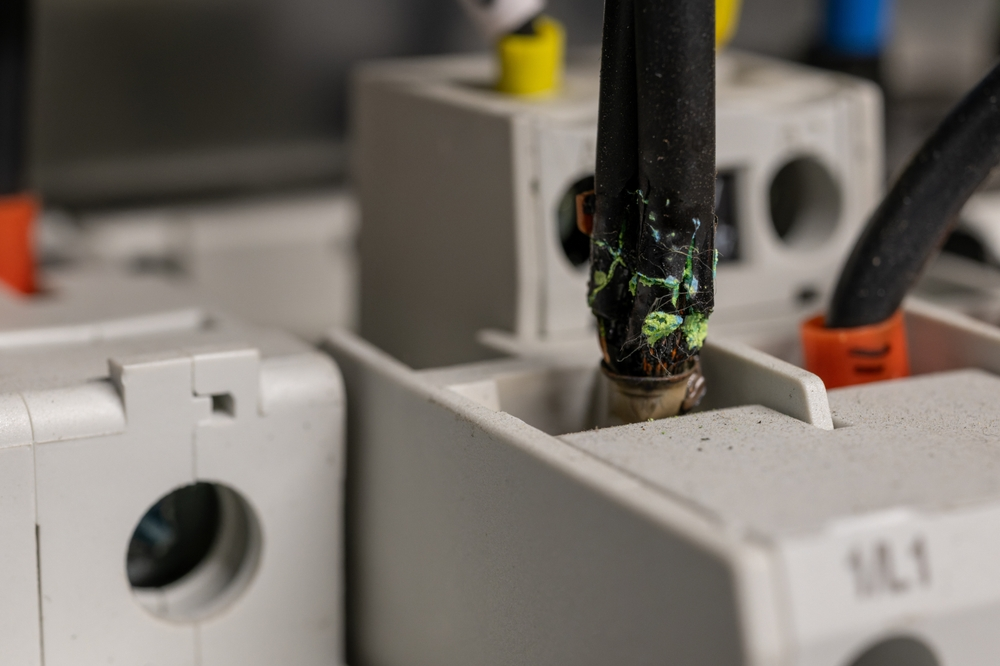
A socket or switch should never feel warm, buzz or crackle. Brown or black marks around the faceplate are a serious warning sign. Stop using it and get it checked.
5. Dead outdoor and security lights
Garden lights, PIR sensor lights and porch lights are often the first to fail after a wet summer. Water gets into fittings and junction boxes, and the fault only shows up when it gets dark. We cover these in more detail below.
6. Overloaded extension leads
Autumn brings out the plug-in heaters, electric blankets and fairy lights. Plugging several high-power items into one extension lead, or daisy-chaining leads together, can overheat the plug and the socket.
7. An old fuse box
If your home still has a fuse box with rewireable fuses, a wooden back or no RCD protection, it may not protect you properly. A modern consumer unit upgrade adds RCD protection that cuts the power in a fraction of a second if something goes wrong.
Your 20-minute electrical safety check before 25 October
You do not need tools or any electrical knowledge for this. Just walk round your home in daylight and tick off each step. Never remove covers, open fittings or touch bare wires.
- Test every light switch. Note any light that flickers, buzzes or takes a moment to come on.
- Look at every socket and switch. Check for cracks, loose faceplates, scorch marks or a burning smell.
- Touch-test plugs in use. A plug or socket that feels warm after normal use needs checking.
- Press the RCD test button. Find the button marked “T” or “Test” on your consumer unit. The RCD should click off straight away. Switch it back on. Do this every three months.
- Check outdoor lights at dusk. Walk round the outside of your home once it gets dark and make sure every light and sensor works.
- Unpick your extension leads. One lead per socket, no daisy-chains, and no heaters on extension leads.
- Test your smoke alarms. Press the test button on each alarm. Swap batteries if needed.
- Stock up on torches. Put a working torch near the consumer unit and one by the bed.
Found a problem? Write down what you saw and where, then contact our team. It helps the electrician diagnose the fault faster.
Outdoor and security lighting: the faults that show up first
Outdoor lights matter far more in winter. They light your path, deter burglars and stop trips on wet steps. They also take the worst of the weather.
The most common outdoor lighting problems we see in autumn are:
| Problem | Likely cause | What to do |
|---|---|---|
| Security light stays on all night | Faulty PIR sensor or water in the sensor | Book an electrician to replace the sensor |
| Light does not come on at all | Blown lamp, failed fitting or tripped circuit | Try a new bulb, then call a professional |
| Lights trip the power when it rains | Water in the fitting or junction box | Leave it off and book a fault-finding visit |
| Light flickers or buzzes | Loose connection or failing driver | Stop using it and get it checked |
| Sensor light triggers constantly | Sensor angle or a failing unit | Adjust the angle, or replace the unit |
Outdoor electrics must be weatherproof and RCD-protected. Never use indoor fittings or extension leads outside. If a storm is forecast, our 30-minute storm prep checklist covers what to do with garden power and outbuildings.
Warning signs that need an electrician now
Some faults cannot wait for a convenient weekend. NICEIC research found that one in seven UK homeowners has ignored potentially dangerous faults such as constant tripping, broken switches and flickering lights. Please do not be one of them.
Call an emergency electrician straight away if you notice:
- A burning or fishy smell near a socket, switch or the consumer unit
- Scorch marks, melted plastic or smoke from any fitting
- Sparks or crackling when you plug something in or flick a switch
- A mild shock or tingle from a switch, appliance or tap
- A consumer unit that trips again straight after you reset it
- Water near electrics, such as a leak dripping through a light fitting
If you smell burning or see smoke, switch off the power at the main switch if it is safe to do so. If there is a fire, get everyone out and call 999.
For everything else, our electricians in London, Leeds, Bristol, Nottingham and Sheffield are available 24/7, including evenings and weekends.
What to do if the lights go out after dark
If your power cuts out one evening, stay calm and work through these steps in order.
- Check your neighbours. Look out of the window. If their lights are off too, it is probably a power cut, not a fault in your home.
- Report a power cut. Call 105 free from any phone, or visit Power Cut 105, to reach your local network operator.
- Check your consumer unit. If only your home is affected, use a torch to look for a switch in the “off” position.
- Unplug before you reset. Switch off or unplug the appliances on the tripped circuit, then flip the switch back on.
- Plug in one at a time. If the power trips again when you plug something in, that appliance is likely the culprit.
- Stop if it will not reset. A switch that trips straight back off, with nothing plugged in, means a wiring fault. Leave it off and call an electrician.
Never reset a circuit more than twice. Repeated tripping is your electrics telling you something is wrong.
Book an electrical safety check (EICR) before winter
The best way to catch hidden faults is an Electrical Installation Condition Report (EICR). Think of it as an MOT for your home’s wiring. An electrician tests your circuits, consumer unit, sockets and switches, then reports anything unsafe.
According to NICEIC, homeowners are strongly advised to have an EICR at least every 10 years. Private landlords must have one at least every five years.
Book a check before the dark nights if:
- Your last EICR was more than 10 years ago, or you have never had one
- You have just moved into an older property
- You have added heavy loads such as an EV charger, electric shower or heat pump
- Your consumer unit has no RCD protection
- You have noticed any of the warning signs above
Want to know costs before you book? See our rate guide for transparent pricing. Whoever you choose, make sure they are registered. You can check any electrician on Electrical Safety First’s find a registered electrician tool.
Frequently asked questions
When do the clocks go back in 2026?
The clocks go back one hour at 2am on Sunday 25 October 2026. British Summer Time ends and the UK returns to Greenwich Mean Time.
Why do my lights flicker more in winter?
Lights run for longer and circuits carry more load when heating and cooking overlap. A loose connection that was harmless in summer can start to overheat and flicker. If it affects more than one light, get it checked.
Is it safe to reset my trip switch myself?
Yes, once. Unplug appliances on that circuit first, then switch it back on. If it trips again straight away, or more than twice, leave it off and call an electrician.
Why has my outside light stopped working?
The most common causes are a blown lamp, a failed PIR sensor or water inside the fitting. Try a new bulb first. If that does not fix it, or the light trips your power, book a professional.
How often should I test my RCD?
Press the test button every three months. The clocks changing is a handy reminder to do it twice a year.
Can you come out in the evening?
Yes. Our engineers work 24 hours a day, 7 days a week, including bank holidays. Call 020 3318 8667 any time.
Get your electrics winter-ready this week
The clocks go back on 25 October. That gives you one more week of lighter evenings to find faults while you can still see them.
Do the 20-minute check this weekend. If anything flickers, trips, buzzes or smells wrong, let a qualified electrician fix it before the dark nights arrive. While you are at it, make sure your heating is ready too with our guide to the 7 things that go wrong when the heating comes on for the first time.
Need an electrician tonight? 24/7 Best Emergency Services connects you with fully qualified, insured local engineers, usually within the hour. No upfront payment: you pay once the job is done.
Call 020 3318 8667 or request a callback and we will get your lights back on.