
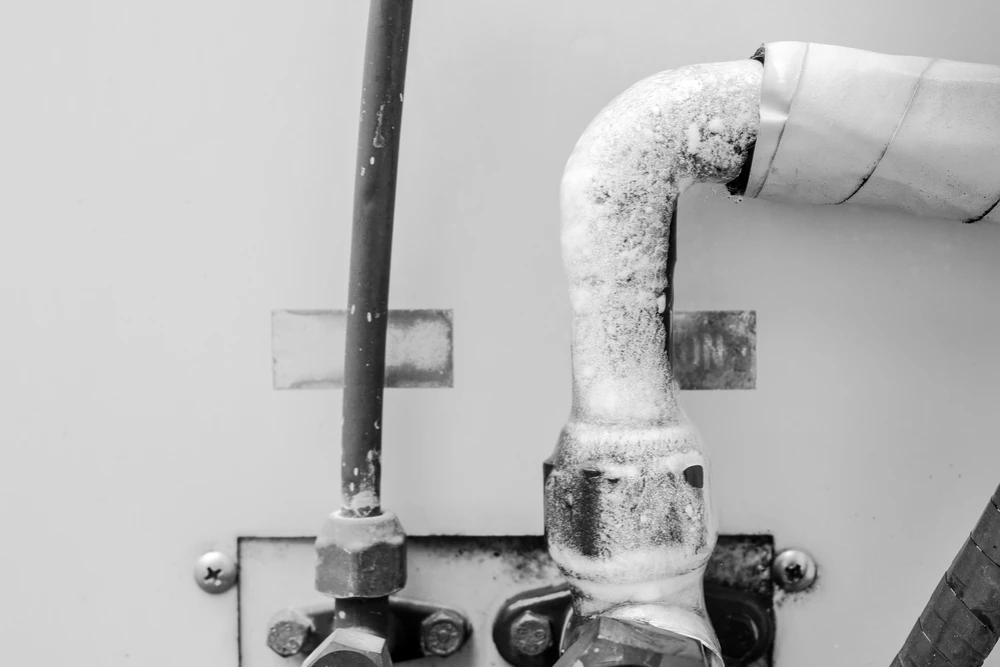
When temperatures drop below freezing, one of the most common reasons a boiler suddenly stops is a frozen condensate pipe. It catches out thousands of households across the UK every winter, from flats in city centres to detached homes in rural areas. The good news is that in most cases you can fix it yourself in a few minutes, get your heating and hot water back on, and take simple steps so it does not keep happening.
This guide explains what a condensate pipe is, how to tell if yours has frozen, how to thaw it safely, and the long term fixes that stop the problem returning.
What is a condensate pipe (and why does it freeze)?
Every modern condensing boiler produces a small amount of acidic wastewater as part of its normal, efficient operation. This water needs to drain away, so it runs out of the boiler through a condensate pipe. If your boiler was fitted after 2005, it is almost certainly a condensing model with one of these pipes.
The condensate pipe is usually the only plastic pipe at the bottom of the boiler, and it is normally white or grey. Ideally it drains into an internal waste point such as a sink waste or soil stack. In many UK homes, though, the pipe has to run outside and down into an external drain. That exposed section is the weak point. A typical boiler can produce around two litres of condensate an hour, and during a cold snap this slow trickle of water can freeze inside the pipe, forming an ice plug.
Once that plug blocks the pipe, the condensate has nowhere to go. It backs up towards the boiler, and the boiler shuts itself down as a safety measure. So a frozen condensate pipe is not a fault with the boiler itself. It is the boiler protecting you, and it is one of the easiest winter heating problems to put right.
Signs your condensate pipe has frozen
A frozen condensate pipe is very likely the cause if your boiler has stopped working and you notice one or more of the following:
- The problem started during very cold, frosty or sub zero weather, especially overnight or first thing in the morning.
- Your boiler was working perfectly until the temperature dropped.
- You hear a gurgling or bubbling noise coming from the boiler.
- The boiler shows a fault or lockout code on its display.
Fault codes vary by manufacturer, so check your boiler manual to confirm. As a general guide, Vaillant boilers often show F28 or F29, Worcester Bosch and some other brands display an EA code, and many models simply lock out and stop firing. If the weather is freezing and the code points to ignition or condensate, a frozen pipe is the most likely culprit.
Before you start: safety first
Thawing a condensate pipe with warm water is a job most homeowners can do safely. To keep it that way, keep these points in mind.
- Never use boiling water. It can crack or damage the plastic pipe, and any water that runs onto the ground can freeze and create a slip hazard.
- Only work on the pipe if you can reach it safely from the ground. Do not climb onto a ladder, roof or icy surface in poor conditions.
- Do not try to move, cut, alter or replace any pipework. Only a Gas Safe registered engineer should carry out work on the pipe itself.
- If you smell gas at any point, do not continue. Leave the property and call the National Gas Emergency line on 0800 111 999.
How to thaw a frozen condensate pipe, step by step
With a kettle, a jug and a few minutes, you can usually clear the blockage yourself.
1. Locate the frozen section
Find the white or grey plastic pipe that leaves your boiler, passes through the external wall and runs down to a drain. If a previous owner wrapped it in insulation, look for a lagged pipe instead, and peel back the insulation so you can reach the pipe.
The blockage most often forms where the pipe is most exposed: at the open end above the drain, at any bends or elbows, or where the pipe is thin and uninsulated. If you cannot tell exactly where the ice is, start at the open end and work back towards the wall.
2. Prepare warm water
Boil the kettle, then let it stand for ten to fifteen minutes so the water is warm rather than boiling. Warm water thaws the ice gently without risking damage to the pipe.
If you would rather not pour water, a hot water bottle, a microwaveable heat pack of the kind used for muscle aches, or a cloth soaked in warm water held against the frozen section all work well.
3. Apply warm water from the top down
Pour the warm water slowly along the pipe, starting at the highest accessible point and working downwards so the water runs over the frozen section. Hot water bottles and heat packs are useful for stubborn blockages, especially at bends. In very cold weather you may need to repeat this two or three times before the ice fully clears.
4. Check the pipe is flowing
Once thawed, you should hear or see the condensate draining freely again, and any gurgling noise should stop. If the blockage was at a bend or a hidden section, give it a little extra time and warm water to be sure the whole length is clear.
How to reset your boiler after thawing
When the pipe is clear, restart the boiler. The reset method varies between models, so always follow the instructions in your boiler manual. On many boilers this means pressing and holding the reset button for a few seconds. Once it fires up, check that your heating and hot water are working as normal. If the gurgling has gone and the boiler stays on, you have fixed it.
What if it will not thaw, or keeps tripping?
Sometimes the warm water trick is not enough. Reach for professional help if:
- You have tried thawing it more than once and the boiler still will not stay on.
- You cannot safely reach the frozen pipe.
- The boiler relights but locks out again, or shows a different fault code.
- The pipe freezes repeatedly through the winter.
Repeated freezing usually points to a pipe that was not installed to current standards, often because it runs externally for too long, is too narrow, lacks a proper fall, or has no insulation. That is a fix worth getting right, because it stops you having to brave the cold every frosty morning.
How to stop your condensate pipe freezing again
Thawing the pipe solves today’s problem. These measures help make sure you are not doing it again next week.
Insulate the exposed pipe
The simplest and cheapest fix is to lag any external section with weatherproof, UV resistant pipe insulation. It is available from most DIY stores for around ten pounds and takes only a few minutes to fit. Make sure there are no gaps, and pay extra attention to bends and the open end where ice tends to form first.
Increase the pipe diameter
A wider pipe is far less likely to block with ice. UK guidance, including British Standard BS 6798, recommends that where a condensate pipe has to run externally, it should be increased to at least 30mm internal diameter (typically 32mm outside diameter). Many older installations use a narrow pipe that freezes easily, so upgrading it is one of the most effective long term solutions. This is a job for a Gas Safe registered engineer.
Keep the external run short and falling
The external section should be kept as short as possible, ideally under three metres, and should slope downwards along its whole length, roughly three degrees of fall, so condensate drains away quickly instead of sitting in the pipe where it can freeze. Cutting the end of the pipe at an angle and fitting a drain guard also helps.
Reroute the pipe indoors where possible
The best fix of all is to remove the risk entirely. Current industry guidance is that, wherever practical, the condensate pipe should drain to an internal point such as a soil stack or a sink waste rather than running outside. An engineer can advise whether rerouting is possible in your home.
Fit trace heating for extreme cold
In very exposed locations, or where the pipe cannot be rerouted, electric trace heating is a reliable answer. This is a thermostat controlled heating cable that runs along the pipe and gently warms it whenever the temperature falls towards freezing. Paired with good insulation, it is highly effective even in the harshest UK winters.
When to call a professional
A frozen condensate pipe is one of the few boiler faults you can usually fix yourself. But any work on the pipe itself, such as widening it, rerouting it or adding trace heating, must be carried out by a Gas Safe registered engineer. It is also worth calling for help if the boiler will not restart, if it keeps locking out, or if you are at all unsure.
If your boiler has stopped in the cold and you cannot get it going again, our Gas Safe registered engineers cover homes right across the UK and are available around the clock for emergency call outs. We can thaw the pipe, get your heating back on, and put in place the upgrades that stop it freezing again.
Frequently asked questions
Can I pour hot water on a frozen condensate pipe?
Use warm water, not boiling water. Boil the kettle and let it cool for ten to fifteen minutes first. Boiling water can crack the pipe and may freeze on the ground, creating a slip hazard.
How long does it take to thaw a condensate pipe?
Often just a few minutes, but a pipe that has been frozen for a long time, or one with a blockage at a bend, can take longer. Repeat the warm water a few times if needed, and use a hot water bottle on stubborn spots.
Will my boiler restart on its own once the pipe thaws?
Sometimes, but usually you will need to reset it manually. Check your boiler manual for the correct reset procedure, as it varies between models.
Why does my condensate pipe keep freezing?
Repeated freezing normally means the external pipe is too narrow, too long, poorly insulated, or does not slope enough. Upgrading the pipe, insulating it, rerouting it indoors or fitting trace heating will usually solve it for good.
Is a frozen condensate pipe dangerous?
It is not dangerous in itself. The boiler shuts down safely to prevent the acidic condensate backing up. The main inconvenience is the loss of heating and hot water until you thaw the pipe.
Do I need a Gas Safe engineer to thaw the pipe?
No. Thawing the pipe with warm water is a safe job for most homeowners. You only need a Gas Safe registered engineer to alter, widen, reroute or replace the pipework itself.